
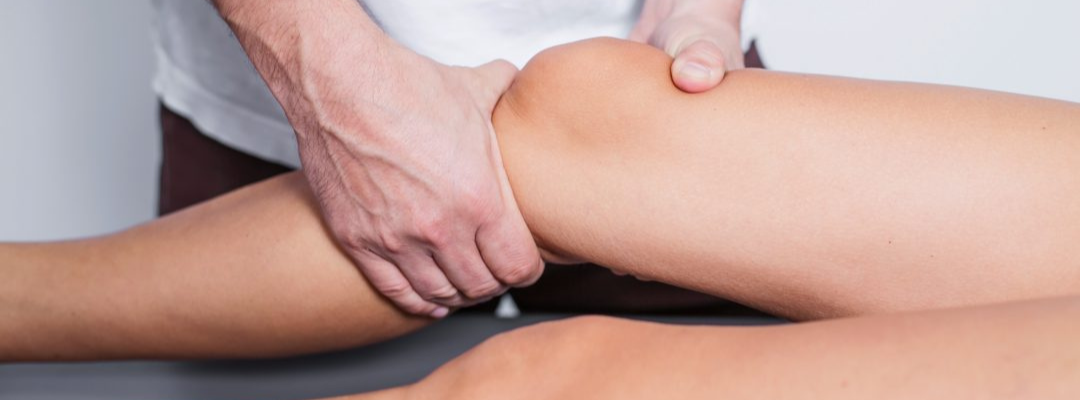
ACL (Anterior Cruciate Ligament) injuries are one of the most common types of knee injuries, accounting for around 40% of all sporting injuries. It can be caused by unnatural movements, such as twisting your knee and lower leg, or damaged if your lower leg moves forward too far – ouch!
Some common causes of ACL injuries include:
-
Landing incorrectly from a jump,
-
Stopping suddenly,
-
Changing direction suddenly,
-
Having a collision, such as during a football tackle.

Once the ACL is damaged, your knee may become unstable and lose its full range of movement, making certain movements (such as turning on the spot) difficult to perform. The sad news – it can stop some players from playing the sport entirely!
But fear not, if you believe you have damaged your ACL, it’s crucial to get it diagnosed by a specialist. Getting it seen to quickly can greatly increase your recovery strategy and prevent further damage.
Rehabilitation
Whether you undergo surgery or not, completing quality rehabilitation is the key to restoring normal knee function, preventing further knee injury and optimising your long-term quality of life. Physical therapy focuses on regaining range of movement, strength, proprioception and stability. You should progress through an individualised, criteria based program, involving three distinct ‘phases’ (early, mid and late). Exercises should encourage range of movement, strengthening of the quadriceps and hamstrings, and proprioception.

Early:
-
Exercises to straighten and bend the knee like using your front leg muscles to straighten the knee and an exercise bike to improve your bending.
-
Exercises to strengthen your front leg muscles like leg extensions.
-
Practising weight bearing and walking evenly on both sides.
Middle:
-
Exercises to improve your single leg balance and control (like standing on one leg or standing on one leg on an uneven surface)
-
Exercises to improve your general leg strength with squats, lunges, and deadlifts.
-
Exercises to improve your single leg strength with single leg extension, single leg squats.
-
Practising running.
Late:
-
Exercises to improve your landing ability (like hopping and landing practice)
-
Exercises to improve your ability to change direction.
-
Practising unexpected change of direction or agility (like sport-related drills with a ball, other unexpected challenges).
-
Gradually returning to sport-related activities.
You need to work hard during each phase in order to optimise outcomes. People with better functional performance have lower chance of re-injury and better long-term outcomes, including lower rates of osteoarthritis.
If you have an injury to your knee whether this occurred from playing sport, a twisting motion or even an old injury that hasn’t healed properly, you may need a more in-depth investigation to help you recover and prevent you from persistent symptoms.
 01480775912

