
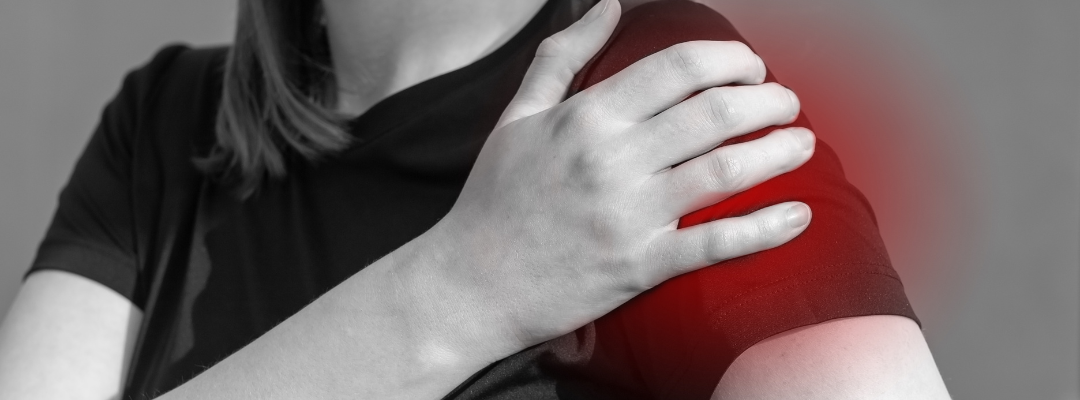
Rotator Cuff Injuries
If you’ve ever experienced shoulder pain in the rotator cuff, you’ll know that it can be one of the most frustrating areas on the body to injure. That nagging dull pain that can limit just about everything you do in normal life. Simple things such as picking things up and moving them can become an ordeal and can’t be done without feeling a twinge in your shoulder.
Injury to the rotator cuff will usually begin as inflammation, often referred to as Rotator Cuff Tendinopathy. The rotator cuff muscles (Subscapularis, Supraspinatus, Infraspinatus and Teres Minor) are small muscles situated around the shoulder joint. Although they have individual actions, their main role is to work together to stabilise the humeral head (ball) in the shoulder socket.
📍Subscapularis: Medial (internal) rotation of the shoulder
📍Supraspinatus: Abduction of the arm (initial 15 degrees)
📍Infraspinatus: Lateral (external) rotation of the shoulder
📍Teres Minor: Lateral (external) rotation of the shoulder
Knowing the functions of the rotator cuff muscles & understanding how weakness can effect how we move during the day, may help us understand why we might be experiencing pain if something isn’t working correctly!
Although the rotator cuff can be injured by a single traumatic incident, generally this isn’t usually the case. As we mentioned earlier it will usually begin as inflammation caused by some form of micro trauma (a small but continuous source of irritation). If the cause of the inflammation is not addressed, and continues over a long period of time, partial tears may develop in the cuff that could eventually become complete tears (a tear all the way through one or more of the rotator cuff muscles).
Recovery and Treatment
- Rest: As prolonged use of an injured shoulder can worsen the condition, doctors typically recommend resting the shoulder and avoiding activities that cause pain.
- Nonsteroidal anti-inflammatory medications (NSAIDs): Over-the-counter medications such as ibuprofen can reduce swelling and pain.
- Strengthening exercises: A therapist may give you a list of exercises. The goal of the exercises is to improve mobility, flexibility and strength. Strengthening muscles around the rotator cuff can reduce the risk of further injury and reduce pain.
- Steroid injection: In cases where rest, NSAIDs and exercises are not enough to relieve pain in the shoulder, your doctor may apply local anaesthetic and cortisone. Although cortisone can be highly effective at reducing inflammation, it does not work well for everyone.
Get in touch with us:
 01480775912
 info@mooreperformance.uk
